
A coffee spill on a new shirt feels like it happens in slow motion. Red wine at dinner? That’s the moment your plans for a clean outfit disappear. The good news is you don’t need a shelf full of stain sprays to fix most messes.
If you act quickly, you can often remove stains from clothes easily with stuff you already have. Coffee, tea, red wine, grease, blood, sweat, ink, makeup, grass, dirt, chocolate, ketchup, and mustard are all common problems you can handle at home.
Your go-to solution is a simple 3-ingredient paste made from baking soda, dish soap, and hydrogen peroxide. It’s strong enough for many stains, gentle enough for most everyday fabrics, and easy to mix on the spot.
Before you start, check the care label and test your remedy on an inside seam. Then follow a simple universal method for almost anything you spill. After that, you’ll use targeted tricks for the stains that need a little extra attention.
Ready to save time, money, and clothes? Let’s get those stains out.
Stock Up on These Simple Household Heroes
Think of stain removal like first aid. If you have the right “tools” ready, you respond faster, and the stain doesn’t get a head start.
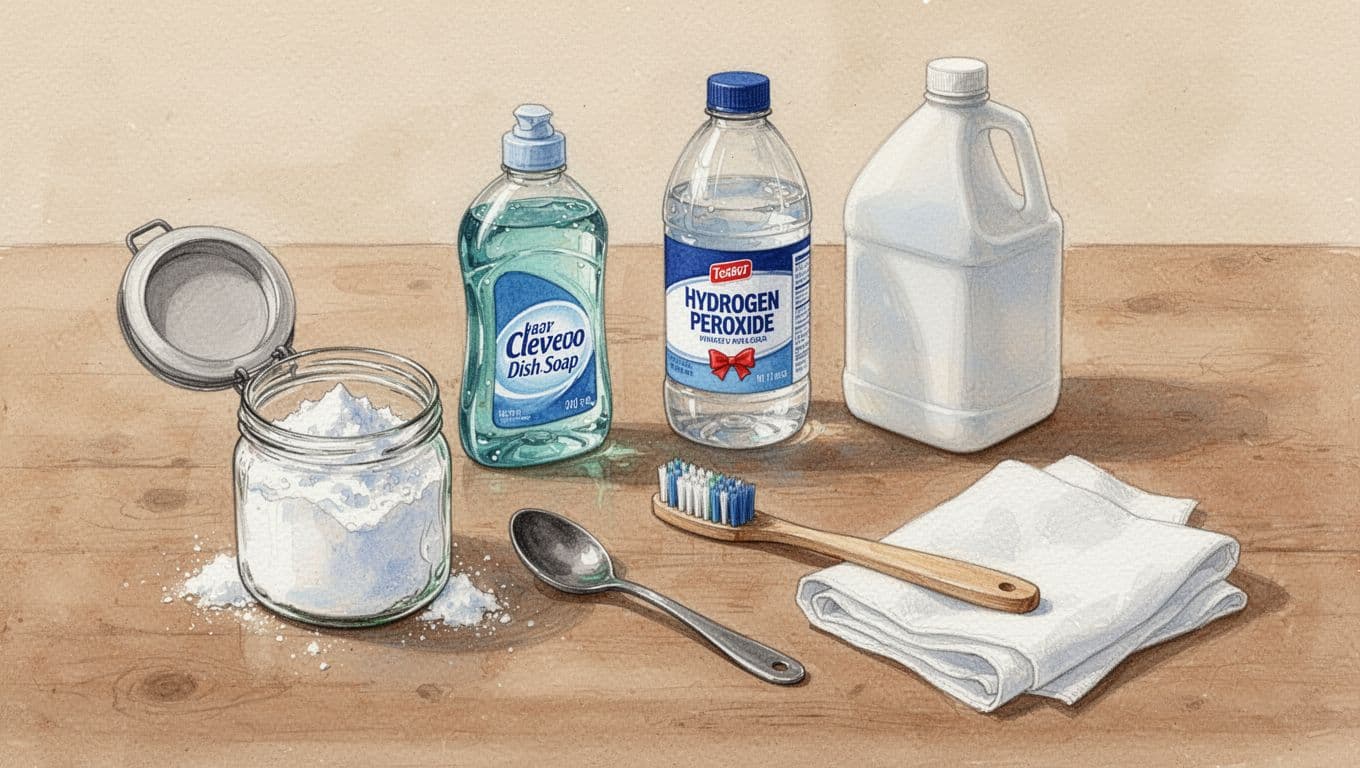
Here’s the small lineup that covers most common stains:
- Baking soda (absorbs and lifts grime)
- Unscented dish soap (cuts grease without fuss)
- Hydrogen peroxide (3%) (helps break down pigments)
- White vinegar (great for sweat, and helps loosen residue)
- Rubbing alcohol (often works for ink)
- Acetone (optional for tough ink, but test carefully)
- Old toothbrush (gentle scrubbing)
- Dull knife or spoon (for scraping off solids)
- Clean cloths or paper towels (for blotting)
You’ll also want one mixing rule: make a paste with equal parts baking soda, dish soap, and hydrogen peroxide. Stir until it turns spreadable. If it seems too thick, add a tiny splash of peroxide. Too runny? Add a bit more baking soda.
Why it works: dish soap breaks down oils, baking soda soaks up mess, and peroxide helps lift color.
Safety matters. Wear gloves if your skin gets irritated, and use peroxide in a well-ventilated area.
Follow These Foolproof Steps for Any Stain
Most stain problems don’t happen because you used the wrong product. They happen because the stain got spread, set, or ignored too long. So use the same basic flow each time.

- Act fast. Blot up excess with a cloth or paper towels. Don’t rub. Rubbing pushes stain deeper.
- Test first. Choose a hidden spot, like an inside seam. Wait a few minutes.
- Pretreat. Spread your 3-ingredient paste on the stain. Or use a targeted mix (vinegar for sweat, alcohol for ink).
- Let it sit. Give it 15 to 30 minutes so it can work.
- Rinse or wash. Rinse well, then wash in the warmest water allowed by the care label. Repeat if needed.
Why does cold water matter sometimes? Blood is a great example. Heat can set proteins in place. Tide’s guidance makes the point clearly: keep it cool and rinse with cold water for blood stains. Here’s their overview on removing blood stains.
Finally, air dry between repeats. Heat from the dryer can lock in what you didn’t fully lift.
If the stain looks “gone,” but you’re not sure, skip the dryer. Recheck after it dries in air.
With the universal steps down, you’re ready for the stains people panic about most.
Wipe Out Coffee, Tea, and Red Wine Disasters Fast
Coffee and tea stains often start as a light mark. Then they darken as they dry. Red wine acts like a dye, especially on white cotton and blends.
Treat them fast, and you’ll usually win. Think of fresh stains like wet paint. Once they dry, they behave differently.
Coffee and Tea Spill Saviors
Start by blotting, then rinse from the back of the fabric with cold water if you can. Next, apply your baking soda-soap-peroxide paste. Use an old toothbrush to work it in gently. You’re coaxing the stain out, not grinding it in.
Let it sit for about 20 minutes, then rinse cold. Finally, wash as usual in the warmest safe water.
For extra help on fabrics like cotton and synthetics, you can compare techniques in how to remove coffee stains.
Quick tip: don’t pour hot water on coffee or tea. Warm water can make some stains bind faster.
Red Wine Rescue Without Panic
Red wine is scary, but you can calm down. First, blot. If the stain is fresh, don’t scrub. You want to remove liquid pigment, not spread it.
Rinse from the back with cold water to push color out. If you have your paste ready, tamp it gently onto the stain using a spoon or your fingertips. Then pat it in so the paste stays in place.
Let it sit for 30 minutes. Rinse and wash in the warmest safe setting.
One gotcha: skip hot water for red wine. If you do, the stain may “set” into fabric fibers. When you’re unsure, cold first, then wash.
If this sounds like a dinner party save, that’s because it is. The fastest wins happen in the first minutes.
Defeat Grease, Blood, Sweat, and Food Stains Effortlessly
Grease and food stains are messy in a different way. Grease grabs at fabric like it’s trying to move in. Protein stains like blood and sweat need cool water habits. Mix those rules up, and you’ll struggle.
Here’s how to handle the big categories without fancy steps.
Greasy Messes from Oil and Food
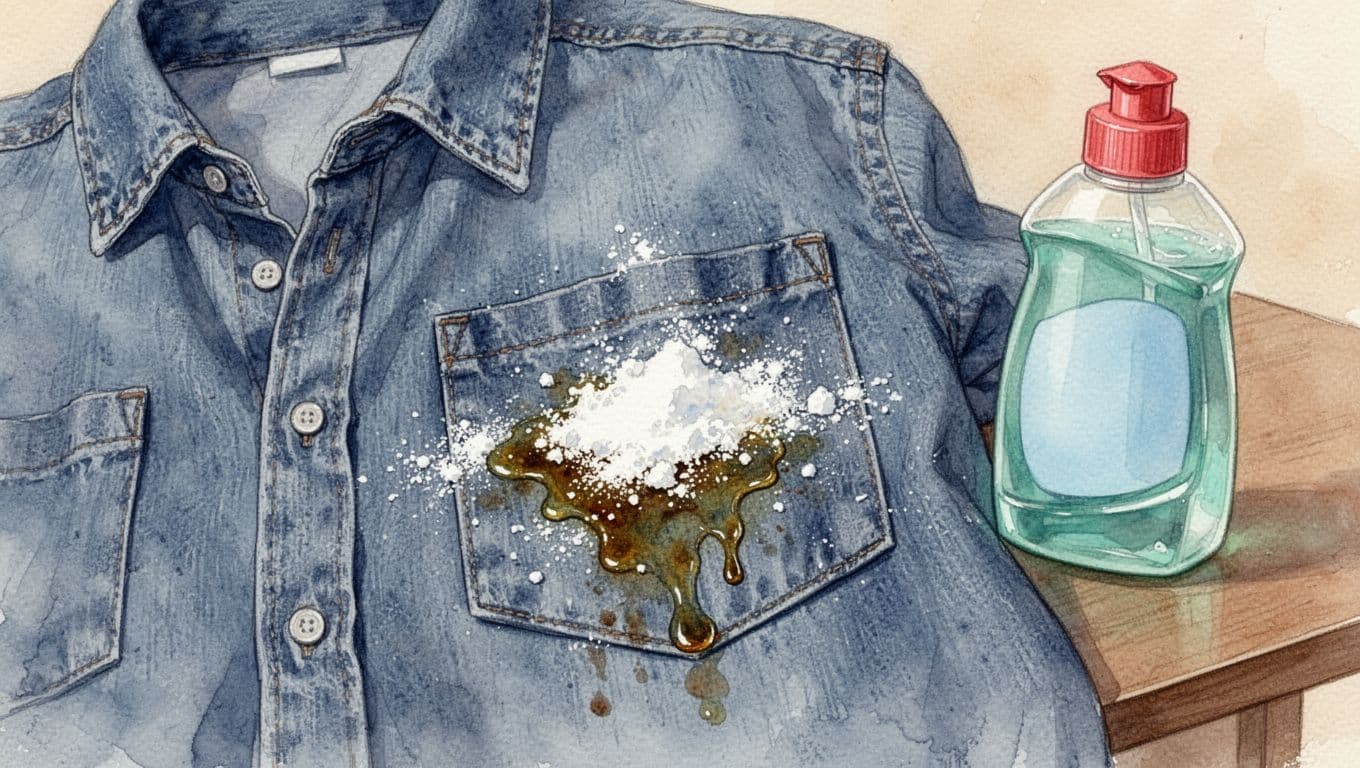
Start with scraping if needed. Use a dull knife or spoon to remove excess oil or sauce. Then apply unscented dish soap directly to the spot. Work it in lightly with the toothbrush.
Next, sprinkle baking soda over the soap. Give it 15 minutes to absorb. Then rinse and wash.
For situations where the grease has already been through a wash, you can see methods that match the logic above in how to remove grease stains from clothes.
Keep grease rules simple:
- Hot water helps grease, but only after you pretreat.
- Skip “drying first” when grease might still be there.
Blood and Sweat Stain Busters
For blood, use cold water only. Rinse the fabric from the back until the water runs clearer. Then apply your paste or peroxide treatment, and let it sit 15 to 30 minutes.
Wash with cold or warm water based on the care label. Avoid hot water until you know the stain is fully lifted.
For sweat, vinegar is your friend. Soak the stained area in a mix of vinegar and water for about 30 minutes. Then wash. If the stain still shows, you can add baking soda and peroxide paste for extra lift.
Cold water keeps blood from “setting.” That one habit saves a lot of ruined laundry.
Sticky Chocolate, Ketchup, and Mustard Meltdowns
Chocolate usually has two jobs: remove oils and remove color. Scrape off any solids first, then pretreat with dish soap. If you can, rinse with cool water. Next, apply the paste and let it work for 20 to 30 minutes. Wash in warm water if the label allows.
Ketchup and mustard often look worse after drying. Scrape off the sticky layer, then apply your paste. Let it sit before washing. If it’s fresh, you can also start with dish soap for the oily parts, then finish with paste for color.
A practical approach: treat food stains as two-step projects. First remove residue. Then lift color.
Tame Ink, Makeup, Grass, Dirt, and Tough Spots
Some stains are stubborn because they sink in or bond to fibers. Ink, grass, and old stains need a more targeted first step.
That doesn’t mean you can’t win. It just means you don’t rush.
Ink and Makeup Smudges Gone Quick
For ink, test first on a hidden seam. Then dab with rubbing alcohol. Use a cotton ball or clean cloth, and work from the outer edge toward the center. This reduces spreading.
After the ink lightens, apply your paste on the remaining mark. Let it sit 15 to 30 minutes, then rinse and wash.
For a more expert-backed view, Good Housekeeping shares testing on ink removal techniques, including what works best for different fabric types, in how to remove ink from clothes.
Makeup can be grease-heavy too, so start with dish soap if it’s oily. Then apply paste for the remaining tint. With makeup, rubbing often spreads pigment, so keep it gentle.
Grass and Dirt from Playtime Adventures
Grass stains are plant stains. Dirt is grit. Both benefit from “lift, don’t grind.”
Start with brushing off dry dirt. Then rinse with cold water. Work your paste into the stained area using circles with the toothbrush. Let it sit around 30 minutes, then rinse and wash.
If the stain still lingers, repeat once before you move on. Grass pigment can hide in the fabric weave.
For tough spots (set-in stains or stains that came out faint), peroxide can help. Use a careful peroxide soak based on the care label, then repeat paste pretreatment after washing. If the fabric is delicate, skip risky steps and consider professional help.
When to stop and call it: silk, wool, and garments with special coatings can react to peroxide and solvents. Also, if the stain has fully dried, keeps coming back, or the fabric looks rough after pretreating, pause and get expert guidance.

Conclusion
That first spill moment is stressful, but you don’t have to live with stains. When you remove stains from clothes easily, the key is fast action, careful pretreating, and rinsing before you wash again.
Your best “default” tool is the 3-ingredient paste made from baking soda, dish soap, and hydrogen peroxide. It handles a lot of everyday stains, especially when you treat them before they dry.
Next time something lands on your clothes, act right away. Treat, wait, rinse, and repeat if needed. If you’re worried about color or fabric safety, always test first.
Can I use this on colored clothes? Yes, test on an inside seam first, and skip long peroxide sits.
Is hot water always safe? Check the care label, and keep it cool for blood and fresh wine.
Save your wardrobe from the next mess. Your clothes want a second chance, and now you know exactly how to give it.