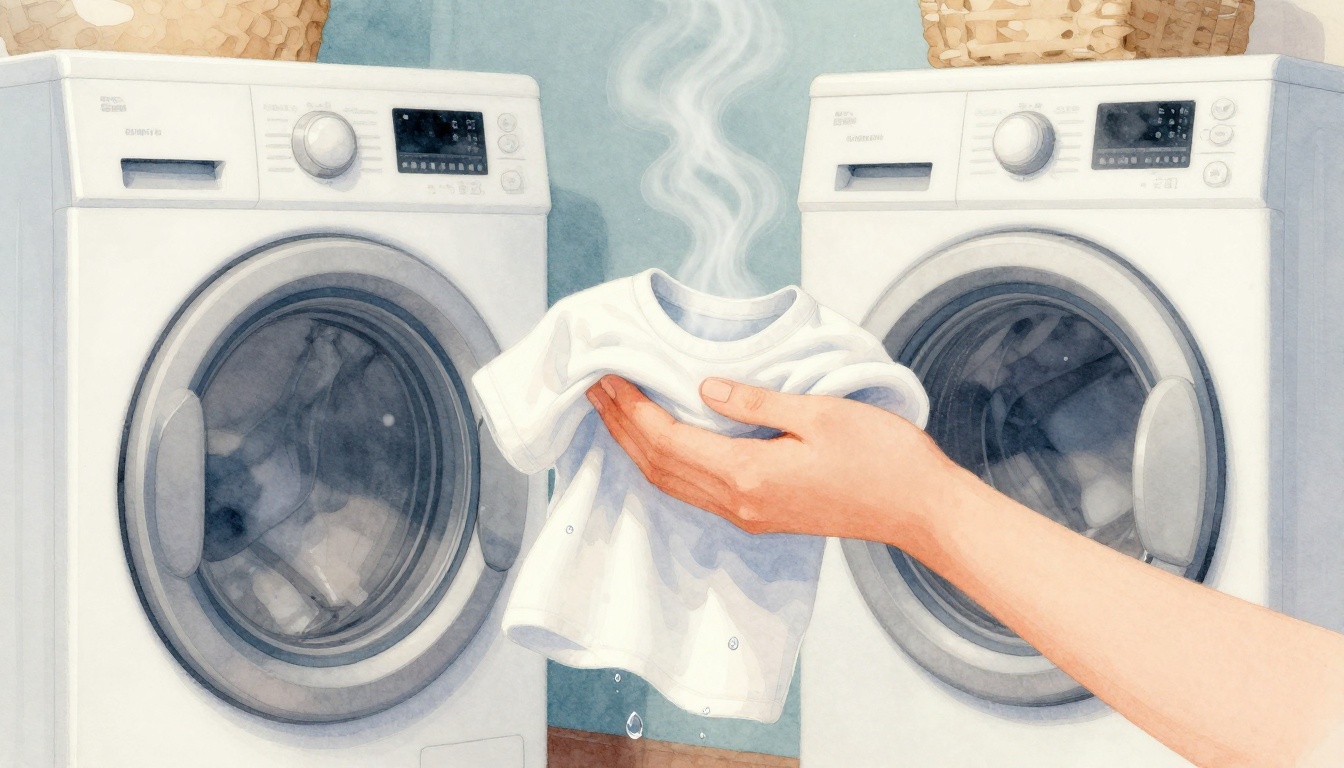
You pull a favorite t-shirt out of the dryer, and it fits your kid now. That “one wash too many” moment happens fast, and it’s annoying when you did everything the same as last time.
The reason behind why clothes shrink is simple: water, heat, and agitation change how fabric fibers behave. In many cases, fibers relax back to a tighter, smaller state after they’ve been stretched during manufacturing. That’s why prevent clothes shrinking usually starts with laundry temperature and drying habits, not “better detergent.”
You’ll learn what’s happening inside the fabric during washing and drying. Then you’ll find out which fabrics shrink most, and why some clothes seem to change size more than others. Finally, you’ll get practical steps you can use right away to keep your clothes fitting the way you bought them.
What Makes Clothes Shrink in the Laundry?
Clothes don’t shrink because they’re “bad” or “weak.” They shrink because fabric fibers get pulled, then pushed back by laundry conditions. When clothing gets made, many fabrics end up stretched under tension. During washing and drying, that tension can release, so the fibers return to a more relaxed shape.
Also, shrinkage depends on what the fabric is made of. Cotton and wool respond differently than polyester. If you want a clear fiber-level explanation, this overview from Lone Creek Apparel on how fibers respond to heat is a helpful place to see the “fiber relaxation vs felting” idea.
In real life, three forces usually work together:
- Water penetration (especially into natural fibers)
- Heat (from hot water and dryers)
- Agitation (the tumbling and rubbing in machines)
Think of fabric fibers like tiny rubber bands that got stretched during production. Washing soaks them, heat warms them, and machine motion helps them settle into smaller positions. Over repeated cycles, that shift can build.

Here’s the part that feels unfair: even “cold wash” loads can cause some shrinkage, mainly because water still swells fibers. Heat just makes the change more likely.
How Water and Heat Team Up to Shrink Fibers
Water and heat work like a two-step system.
First comes water. Natural fibers like cotton, wool, and linen absorb moisture. That moisture makes fibers more flexible, so they can shift from their stretched positions. Next comes heat. Warm temperatures increase fiber movement and help weaken bonds that hold the original shape. Even if you use “cold,” your laundry still experiences warmth during the wash cycle, and your dryer adds a big hit of heat.
You can picture it like this:
- Cold water: less fiber movement, still some relaxation.
- Hot water: more swelling and faster shape change.
- Dryer heat: encourages fibers to “snap back” smaller.
If you’ve ever heard “it’s only the dryer” versus “it’s the washer,” you’re not alone. Many households debate where shrinkage truly begins, and TableAndSpoon’s breakdown of whether clothes really shrink in the dryer helps frame why both steps matter.
A key point: tighter, denser weaves often resist shrinkage more than loose knits. That’s why a cotton sweater may tighten up, while sturdier denim can stay closer to its original size.
The Role of Washing Machine Agitation
Heat and water do a lot, but agitation is the quiet partner. It’s the tumbling, twisting, and rubbing that happens in most washers.
When fabric is wet, fibers can move. Then the machine forces cloth to roll over itself. That movement can cause fibers and yarns to settle closer together, especially in knits. Over time, those smaller positions become the new normal.
Here’s a helpful comparison:
- Machine wash: fibers rub and rotate repeatedly, so they can lock into tighter structures.
- Hand wash: you can be gentle, and you control how much the fabric twists.
Even within a washer, the cycle name matters. A “delicate” or “gentle” setting usually reduces time, speed, and rough handling. If you’ve ever noticed that your everyday tees shrink, it often comes down to frequent normal cycles plus heat drying.
Bottom line for agitation: less motion while wet often means less change in size.
Which Fabrics Shrink the Most and Why
If you want to predict shrinkage, start with fiber type and weave. Natural fibers tend to be higher risk, especially those that swell or have texture that “locks” into place.
A practical way to think about it:
- Cotton shrinks by relaxing.
- Wool shrinks through felting and scale interlocking.
- Silk and other naturals swell and adjust their structure.
- Synthetics like polyester usually stay more stable because the fibers don’t absorb water the same way.
For a quick look at which materials tend to be most at risk, see Craft Cleaners’ guide to shrink-prone fabrics.
Here’s a simple comparison of what typically shrinks more:
| Fabric | What’s happening | Shrink risk |
|---|---|---|
| Cotton | Fibers relax and return closer to original tighter state | High |
| Wool | Fibers felt together as scales interlock | Very high |
| Linen | Swells, then shifts as it dries | Medium |
| Polyester | More resistant to swelling, shape holds better | Low |
Now, let’s break it down by fabric.
Natural Fibers Like Cotton and Wool: High Risk
Cotton is the classic shrink culprit. During manufacturing, cotton yarns can get stretched. When you wash, the fibers absorb water and relax. Then they can settle back into a smaller structure.
Wool is even trickier. Wool fibers have scales. When heat and moisture show up, those scales can interlock. That process is called felting, and once it starts, the fabric can feel permanently tighter.
This is why wool sweaters can change fast in a dryer. If you’ve ever heard someone say wool “shrinks even when you’re careful,” it’s usually because agitation and heat hit the felting trigger.
Synthetics and Tight Weaves: Safer Choices
Polyester is more stable. The fibers don’t absorb water as much, and they tend to keep their structure better through wash cycles. That said, polyester blends can still shrink a bit, especially if the blend includes cotton or wool.
Weave also plays a role. Loose knits create more “give” and more space for fibers to shift. Tight weaves limit that movement. Denim, for example, is dense. That’s one reason jeans often hold their shape better than a lightweight sweater.
You can use this when you buy clothes. If a tag says “dry clean only” or “lay flat to dry,” treat it as a warning, not a suggestion. Care labels exist because the fabric needs specific handling to stay true to size.
Easy Ways to Prevent Your Clothes from Shrinking
If you want the simplest rule, it’s this: cooler temps and gentler handling protect the fibers. Most shrink problems improve when you stop using hot settings and start drying more gently.
Also, avoid the trap of “it shrunk once, so I’ll fix it next time.” Shrinkage can stack up. Each wash nudges fibers into the tighter state.
Here are practical steps that actually help.
Switch to Cold Washes and Air Drying
Start with wash temperature, then move to drying. Cold water prevents extra swelling and limits heat-driven shape change.
For a straightforward set of rules, Southern Living’s laundry guidance for avoiding shrinkage lines up with what most fabric care labels recommend: keep water cool, handle gently, and avoid high heat.
Try this approach:
- Sort by fabric and label. Set aside knits, wool, and anything “delicate.”
- Wash in cold water on a gentle or delicate cycle.
- Use less time in the washer. Short cycles reduce agitation.
- Skip the dryer heat. Air dry when you can.
- Hang or lay knits flat. Pulling at wet fibers can stretch them, so support the garment evenly.
For knits like wool or cotton sweaters, laying flat often helps them dry into the right shape. If you hang a heavy knit, it may stretch in the wrong direction as it dries. Then it looks “not the same size,” just for a different reason.
If you still need a dryer sometimes, choose low heat and remove items while slightly damp. Then let them finish drying on a rack.
Choose Pre-Shrunk Clothes and Read Labels
Some clothes come treated to reduce shrinkage. “Pre-shrunk” usually means the fabric went through controlled processing so it changes less in normal laundry. Still, it’s not magic. Hot water and high heat can push even pre-treated fabric to shrink.
Care labels are your best shortcut. They tell you the safe heat range and whether the item can handle tumbling.
To keep things simple, use this habit: check labels every time you wash something you care about. If you want a quick reminder list, Clean Right Laundromat’s tips to prevent clothes shrinking highlights label checks, cold washes, and gentler drying.
When you read labels, look for signals like:
- Water temperature symbols (especially “cold”)
- Drying instructions like “tumble low” or “line dry”
- Material notes for wool, knits, or blends
Finally, adjust expectations based on what you own. Cotton tee shirts can usually handle more laundry than wool. But a wool cap, wool sweater, or loose knit dress can need special care every wash.
If you want more expert-backed “don’t shrink your clothes” habits, Martha Stewart’s guide to preventing shrinkage is worth skimming for extra reminders, especially around delicate cycles and heat control.
Conclusion
Clothes shrink because water, heat, and agitation push fabric fibers out of their original stretched positions, then help them settle smaller. Natural fibers like cotton and wool are most at risk, while synthetics often resist shrinkage better.
If you do only three things, do these: wash cool, choose gentle cycles, and air dry when possible. Then your favorite pieces last longer, and you stop playing “guess the size” after every load.
FAQ: Does dry cleaning shrink clothes? In most cases, no, because it uses a different cleaning method than washing and drying at home. However, heat pressing and certain fabric treatments can still change some garments.
What’s the worst thing that’s shrunk on you, and what one habit will you change this week? Share your story, then check your laundry habits before the next load goes in.