You can shrink a favorite wool sweater in one bad cycle, just because you ignored a few small symbols on the tag. Laundry symbols meaning is simple: these icons tell you the safest way to wash, dry, iron, bleach, and get professional dry cleaning. They follow the international ISO 3758:2023 standard (released in 2023), and there haven’t been major changes as of March 2026.
If you’ve ever wondered why “low heat” still feels risky or what the triangle means, you’re not alone. In the sections ahead, you’ll learn how to read the label layout in order, then match each symbol type to the right fabric (cotton, wool, delicates), plus common mistakes that cause fading, warping, and bleeding colors.
Next, you’ll see exactly how to decode wash, dry, iron, bleach, and dry-clean icons step by step.
How Laundry Care Labels Are Put Together
When you look at a care label, it can feel like you’re decoding secret code. The good news is the layout follows a clear order. Once you know what each icon group does, you can scan the label fast, without guessing.
Most labels use a row of up to five main symbols in this order, starting with washing. After that, you read the extra marks inside each symbol (like dots and bars) to fine-tune the setting.
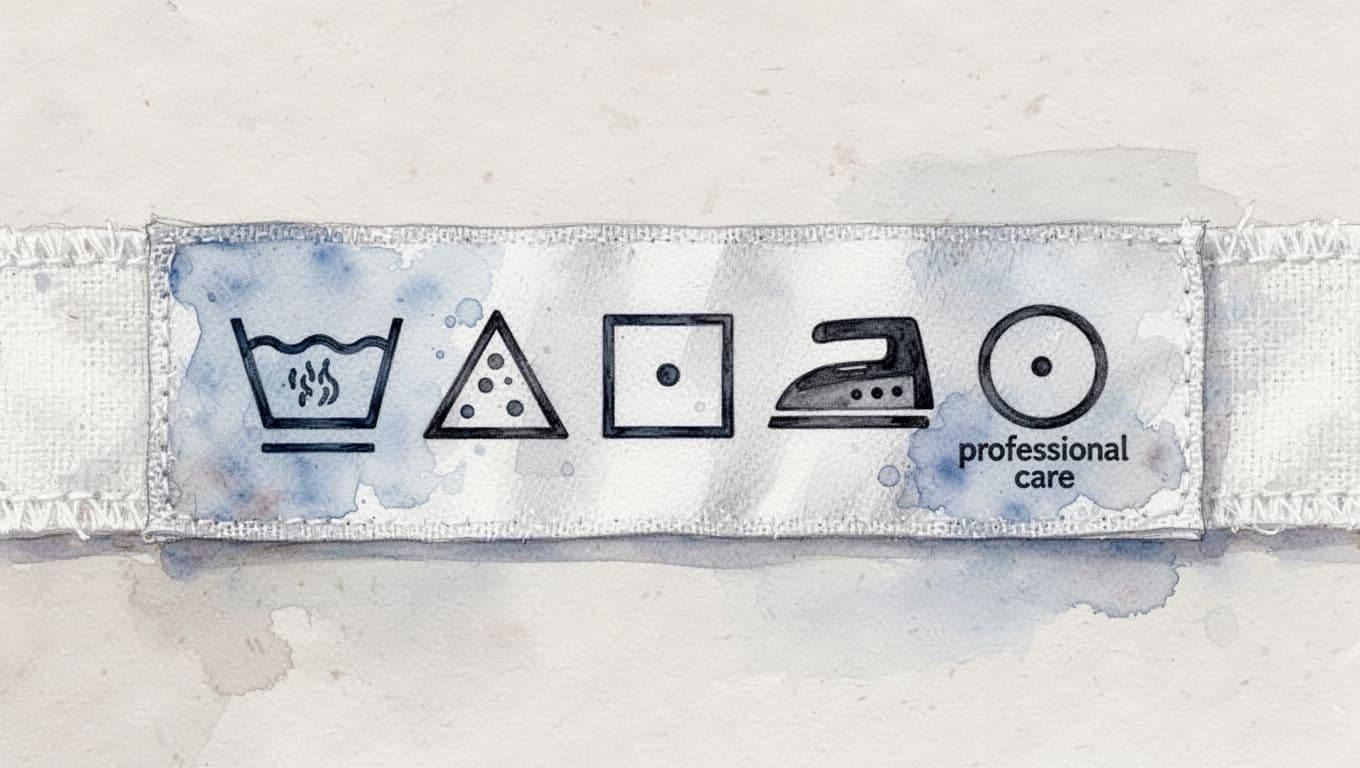
Here’s the typical flow most shoppers see:
- Wash (tub) first, because it sets the base risk level for the fabric.
- Bleach (triangle) next, since bleach can permanently damage fibers.
- Dry (square) after, because heat and airflow affect shrink and stiffness.
- Iron (iron) fourth, because heat and steam can change the fabric surface.
- Professional care (circle) last, because dry cleaning uses solvents, not water.
Also, watch for the “negative” version of any step. An X through a symbol means “don’t do this.” Those quick X marks save clothes when you panic and throw something into the machine.
Below is a simple guide to what the main shapes are built to tell you.
| Icon shape | What it controls |
|---|---|
| Tub | Washing method and temperature limits |
| Triangle | Bleach type allowed (or not) |
| Square | Drying method and heat level |
| Iron | Ironing heat and steam limits |
| Circle | Professional dry-cleaning solvents |
One more detail: some labels add “special rules” using small extras. For example, a flower symbol usually points to “no softener,” because certain finishes can trap residue or mess with absorbency (especially on towels). If you want a solid reference for how these symbols line up worldwide, see GINETEX care symbols.
Regional labeling can also change how the info shows up. In the EU, the symbols are typically black and paired with Celsius temps. In the US, you may also see wording plus symbols, because US labeling practices often follow additional requirements from bodies like the FTC, and industry guides like ASTM’s care symbol standard (for example, ASTM D5489 care symbols). Translation: the icon meaning stays consistent, but the presentation can look a little different.
The Role of Each Main Icon
Each main icon acts like a “section title” for how to treat that garment. Think of the label like a map, with each symbol as a landmark. You don’t need to memorize everything at once. You just need to know what shape to look for first.
Tub (Wash): your cycle and temperature limits
The wash tub tells you whether machine washing is allowed, plus the temperature limit. Inside the tub, you’ll often see temperature dots and sometimes lines that mean gentler action.
In plain terms:
- Tub + dots = max wash temperature
- Tub + lines = normal wash vs gentler wash action
For example, a cotton T-shirt label often shows a tub with more heat allowance than a silk blouse. If you ignore that, you might get shrink or fading.
Square (Dry): heat level and drying method
The drying square controls the dryer setting. You’ll usually see one of these cues:
- Dots inside the square for heat intensity (lower vs higher dryer heat)
- Lines inside or under the square for “gentle” or reduced drying action
- An X through the square when tumble drying is not allowed
This matters because cotton can usually handle dryer heat, but polyester blends can warp or pill if you blast them too hot.
Iron (Iron): heat and steam restrictions
The iron icon is your cue for safe pressing and smoothing. The key thing is the heat level, which often connects to dots on the iron, plus any steam restriction marks.
If the label shows lower heat, that’s not a suggestion. It’s the difference between a crisp finish and a shiny scorch mark.
Triangle (Bleach): which bleach is allowed
The bleach triangle is one of the most important icons, because bleach changes color permanently.
Here’s how the triangle usually gets read:
- A triangle with an allowed bleach type points to which bleach you can use.
- A triangle with an X means “do not bleach.”
The triangle can also include markings that indicate different bleach options. For many labels, it helps to think “bleach type matters,” not just “bleach yes or no.”
Circle (Dry-clean): which solvents are safe
The professional care circle tells you whether the garment needs dry cleaning. It may list solvent options via markings inside the circle.
In real life, that means:
- A circle with allowed solvent codes = dry-clean is safe with those chemicals.
- A circle with an X = do not dry clean.
This is where many people get stuck, because “dry clean” sounds generic. Still, the label is telling you exactly which solvent system the fabric was tested for.
Special indicators to watch (like “no softener”)
Sometimes the label adds a flower-like mark to warn against softener use. If you see that, treat it like a hard rule. Softener can interfere with absorbency and can also leave residue that traps soil, especially on towels and athletic wear.
If you want a practical view of symbol updates and why certain icons changed in recent editions, check Bureau Veritas on ISO 3758:2023 updates. It’s a helpful reminder that these markings come from standardized labeling work, not random manufacturer choices.
In short, each shape controls one step of care. Start with the tub, then move left to right through bleach, dry, iron, and professional care. Once you do that, the smaller marks inside each icon become easy to interpret.
Washing Symbols: Get the Tub Right Every Time
When the care label shows a tub, it’s your first and biggest clue. Think of it like the “engine” of the whole washing process. If you pick the wrong tub rule, you can shrink knits, warp elastics, and dull colors before you even notice.
So before you set the dial, scan the tub carefully. You’re not just looking for wash-or-don’t-wash. You’re reading temperature limits and handling rules for that fabric.

Hand Wash and No-Wash Warnings
Let’s start with the tub versions that stop most people in their tracks: hand wash and no wash. These symbols often mean your garment needs a gentler plan, not just a shorter cycle.
First up, the hand wash icon. It looks like a washtub with a hand inside. For many labels, that hand mark also comes with a temperature limit. For wool and silk, follow it closely. A common rule you’ll see is hand wash up to 40°C. In practice, that means warm water at most, not hot water from the tap.
Now here’s an important update you may notice on newer tags. Some care labels use a hand symbol plus an underline to show room temperature washing for fragile items. That room-temp range is usually 16 to 22°C. If you see that underline, treat it like a “cold bath” instruction. Wool and silk can handle cleaning, but they struggle with heat and agitation.
Also, don’t mix up “hand wash” with “quick rinse.” Hand washing still needs proper technique. Use gentle movement, avoid heavy scrubbing, and skip long soaking if the label doesn’t call for it.
Next is the most strict tub warning: no-wash. This is the washtub with an X through it. When you see that X, you must not wash the item in water. The label is telling you the garment should go to professional dry cleaning only, because the fabric and finishes are not meant for laundering.
Because this is where mistakes get expensive, remember this simple rule:
If the tub has an X, your only safe path is dry cleaning.
One more detail that pairs with hand and no-wash warnings is the “wring” control. You might see a tub with a bar over (often read as “do not wring”). That’s common for delicate knits and some silks. In that case, you can still wash by the label’s method, but you should press out water gently and hang to dry.
If you want a quick cross-check for how these icons map to care practices, see Intertek’s care label recommendations PDF. It’s especially useful when labels feel too small to trust.
When you get the tub right, the rest gets easier. You’re choosing the safest water temperature first, then letting the rest of the symbols fine-tune the details like drying and ironing.
Dryer and Iron Heat Levels
Once you learn the symbols for heat, drying and ironing stop feeling like a guess. Think of heat like the volume knob on a stereo. Too low, and your clothes stay damp. Too high, and fibers “sound” warped, scorched, or permanently stiff.

Dryer square: dots and lines that tell you how hot
Most dryer rules sit inside the square icon. Then you read the extras inside it:
- Dots match across: one dot is low heat, two dots is medium, three dots is high.
- Lines inside the square usually mean gentle or reduced drying action, even if heat might also be lowered.
- If you see an X through the square, the label is telling you no tumble drying. In many cases, it wants air drying instead.
Here’s the simple mental model that keeps you safe:
- Low (1 dot) fits delicates and synthetics.
- High (3 dots) fits cotton and thicker fabrics.
What “circle inside the square” usually means
On many labels, you’ll also see a circle inside the dryer square. That circle points to tumble drying. After that, the dots decide the heat level. If the label wants you to avoid the dryer, it uses the X mark instead.
If you’re staring at a label that looks busy, don’t panic. Read it in this order: square (drying method) first, then the dots/lines (heat and gentleness).
Iron icon: dots set heat, steam marks tell you what’s allowed
Now switch to the iron symbol. Like the dryer, it uses dots to show heat level. The dots are your safest guide:
- Low heat for synthetics and delicate blends
- Medium heat for wool/silk type fabrics
- High heat for cotton and linen
Next, watch for steam. A wavy line under the iron often means steam is okay. If the iron has an X, it means do not iron at all (even with steam).
If you want a second opinion, How to Read Laundry Labels is a handy companion when symbols feel too small.
Quick reference: matching heat to fabric
This table turns the icon logic into a fast match you can use while you’re loading laundry.
| Icon detail | Typical meaning | Best fabric examples |
|---|---|---|
| Dryer square + 1 dot | Low heat tumble | synthetics, delicates |
| Dryer square + 2 dots | medium heat tumble | blends that tolerate moderate heat |
| Dryer square + 3 dots | High heat tumble | cotton, sturdier weaves |
| Dryer square + lines | gentle or reduced drying | items that need calmer treatment |
| Dryer square + X | no tumble, air dry instead | fragile knits, items labeled for no dryer |
| Iron + 1 dot | low iron heat | synthetics |
| Iron + 2 dots | medium iron heat | wool, silk-type fabrics |
| Iron + 3 dots | high iron heat | cotton, linen |
| Iron + wavy line | steam allowed | fabrics that tolerate steam |
| Iron + X | do not iron | heat-sensitive finishes |
In short, dots set heat, lines soften the process, and X marks shut the door.
Bleach and Pro Clean Choices
Bleach and dry cleaning icons work like “permission slips.” They tell you what’s allowed, not just what to avoid. If you ignore them, you can end up with yellowing, weak fibers, or a fabric finish that never looks right again.
Bleach triangle: empty, chlorine only, non-chlorine, or no bleach
The triangle is where bleach rules live. Here’s how to read it:
- Empty triangle: any bleach is allowed (both chlorine and oxygen types).
- CL inside the triangle: chlorine bleach only.
- Lines inside the triangle: non-chlorine bleach only (oxygen type).
- Triangle with an X: no bleach at all.
A good example: if you use chlorine when the label wants oxygen-only, colors and some dyes can shift fast. In the worst cases, the fabric surface can look dull or spotty after repeated cycles.
Also pay attention to fragile finishes. Many silk and some specialty fabrics show a triangle X. When you see that, treat it like a locked gate.
Dry clean circle: what solvent the fabric can handle
Now look at the circle used for professional cleaning. It’s not just “dry clean yes or no.” It lists the solvent types the garment can handle:
- Empty circle: any solvent is okay.
- P: perchloroethylene (often called perc).
- F: hydrocarbons and silicone-based solvents (a 2023-era update you may see on newer labels).
- Circle with an X: do not dry clean.
This matters because different solvents interact differently with dyes, coatings, and fabric treatments. When the label limits solvent type, the goal is protection, not convenience.
When the label gets strict: colors and fragile fabrics
Two common patterns show up in the real world. First, bright colors often need gentler bleach rules (oxygen instead of chlorine). Second, fragile or specialty items often get both strict bleach rules and stricter dry-clean guidance.
If you want a practical run-through of common tag markings, Care Symbols: What Do Laundry Tags Mean? pairs well with this icon logic.
Dry cleaning choice: circle first, then the code
When a garment says “dry clean,” don’t assume the cleaner already knows what your tag means. The label code is the part you should hand over. It helps the cleaner match the right solvent system to the fabric.
In short, triangle tells bleach rules, circle tells solvent rules, and both work best when you follow them exactly.
Fabric-Specific Tips and Common Pitfalls to Dodge
Laundry symbols can feel universal, but your fabric choice changes how risky every setting becomes. In other words, the same icon can mean “fine” for cotton and “disaster” for wool.
Think of the care label like a recipe. The icons are the measurements. Your fabric is the oven. Ignore the recipe, and your “dish” comes out wrong, fast.

Updates from 2023 and Regional Twists
ISO 3758:2023 brought a few changes that matter when you buy or care for items across borders. Two updates show up again and again: room-temperature hand wash and F solvent codes for dry cleaning. Also, some symbol graphics were refreshed, so labels can look slightly different than older tags.
Here’s how the 2023-era “room temp hand wash” usually behaves in real life. If the hand-wash icon has a bar underneath, treat it like washing in cool, not warm water. That’s the difference between a fragile sweater staying soft and turning stiff.
For dry cleaning, you might see an F code inside the “professional care” circle. In plain terms, F solvents are a specific set of dry-cleaning chemicals used for certain fabrics. If you’re in the US and your tag uses words instead of the full symbol set, don’t assume it’s generic “dry clean.” The solvent type can still be the protection your garment needs.
Regional wording can also trip you up. In the EU, you’re more likely to see symbols with fewer English words, and the system lines up closely with the ISO/GINETEX style. In the US, labels often include words plus symbols, and the symbols may not match exactly how you expect from ISO-only tags. So, when you see a symbol that looks familiar but “missing details,” read the words carefully instead of guessing.
If you want a reliable, baseline reference for the 2023 release, use ISO 3758:2023 care symbols updates from SGS or Intertek’s summary of the new care labeling standard. They help you trust what changed, not just what you heard from a friend.
In short, for cotton, most settings act forgiving. For wool, the 2023 room-temp hand-wash idea can be the whole story. For delicates, older “good enough” habits get punished fast. Save your wardrobe by matching your fabric to the icon details, not your memory of what worked once.
Conclusion
Laundry symbols prevent costly mistakes, and once you can read them, you can treat almost any garment with confidence. The biggest takeaway is simple: match the icon order and settings to the label, and you’ll avoid most shrink, fading, and fiber damage before it starts.
Next time you load a washer or grab the dryer dial, pause for 10 seconds and scan the tub, then bleach, then dry, then iron, then professional care. Ready to master your laundry? Check your next load, then share this guide and pin it to your laundry room so you can find it fast.
Fun fact: shared care standards like ISO 3758 help reduce ruined clothes across the globe, saving billions in waste and replacement buys each year.