
Ever step into your apartment and think, “How is this place already messy?” Small spaces can feel that way fast, especially when every drawer and corner pulls double duty.
The good news is that organizing small spaces does not require a total makeover. When you clear a few key spots and store things smarter, your home feels calmer right away. Plus, you’ll spend less time hunting for stuff.
Right now, one trend keeps coming up for tiny homes and apartments: vertical storage. Instead of spreading items across surfaces, people use wall space, doors, and hidden compartments to keep the floor open.
Below, you’ll find easy steps, room-friendly hacks, and habits that help you stay organized. Start small, build momentum, and let your space feel bigger without buying much.
Start Small to Build Quick Wins and Clear Clutter Fast
Big decluttering plans sound nice. In a small home, they can feel like staring at a mountain. Instead, focus on one spot and finish it. That’s how momentum happens.
Begin with an area that’s visible or annoying daily. A kitchen drawer, the entryway basket, or the under-stairs nook. When you remove even a little clutter, you get instant relief.
A helpful mindset is to follow a “one-room” rule, like Apartment Therapy recommends. It keeps you from bouncing around all day and ending with more mess. If you want quick ideas that work in compact layouts, Modern Mom also shares small-space decluttering tips that feel doable on busy weeks.
Here’s a simple method you can start today:
- Pick one zone (like one drawer or one shelf). Set a timer for 15 minutes.
- Grab a basket and do one pass. Any out-of-place items go in the basket.
- Sort into three piles: keep, move, and remove.
- Return items immediately to their new home. Don’t “save” them for later.
- Watch for duplicates. Do you really need ten spoons, or just one set?
The trick is to keep piles off the floor. In small spaces, piles grow legs and spread.
The Daily Basket Sweep for Instant Tidiness
Want a tidy home without a big weekend reset? Try the 10-minute daily basket sweep.
Set one big basket on a chair or counter. Then walk room to room, drop anything out of place into the basket, and stop when the timer ends. Tomorrow, you’ll finish the returns.
After you’ve gathered items, sort them back fast. Keep it simple:
- Put obvious items back first (keys, chargers, mugs).
- Leave harder items for later. For example, paperwork can go back during a weekly check.
- Shake out the basket before you put it away. This prevents “mystery clutter.”
This method works because it stops mess from piling up. Instead of letting clutter spread across surfaces, you catch it early.
Try the 5-Day Shakedown to Decide What Stays
If you dread decluttering, the 5-Day Shakedown can make it feel less scary. You do not need a perfect system. You just need a clear rule.
Over five days, you touch each item once. Decide what happens to it right then. There’s no “maybe later” pile.
Use this flow for each item:
- Keep (it belongs somewhere in your routine)
- Remove (donate, sell, or recycle)
- Replace (only if you truly need a better option)
For small spaces, this avoids the classic trap: you clear one area, then everything crowds into another. Instead, you keep your decisions moving.
No time for five days? Compress it into one day. Choose a single category instead. For example, do “bathroom bottles” or “cookware lids.” Speed matters, but so does clarity.
If an item does not earn its spot, it won’t stop taking space. Small spaces punish “someday” storage.
Unlock Hidden Space with Vertical and Smart Storage Tricks
When floor space runs out, your walls become the real square footage. That’s why vertical storage is trending so hard right now. Vertical shelving, hidden compartments, and behind-the-door solutions help you store up without stuffing your home.
Think of it like using the empty space above a bookshelf. You’re not adding clutter. You’re moving clutter to a place it fits.
A few vertical and smart options that work well in the US:
- Under-bed and under-stair storage for seasonal items, extra bedding, or shoes.
- Over-door organizers for shoes, cleaning tools, and toiletries.
- Hanging storage for clothes and bags (when you can keep it tidy).
- Floating shelves and ladder shelves for books, baskets, and decor.
- Storage furniture like ottomans or coffee tables with lids.
Bins help too, especially when you keep categories consistent. Clear bins make it easier to find items without dumping everything out.
If you want more ways to go vertical, check ideas like these 26 vertical storage ideas for 2026. Just focus on options that match your daily routine, not random aesthetics.
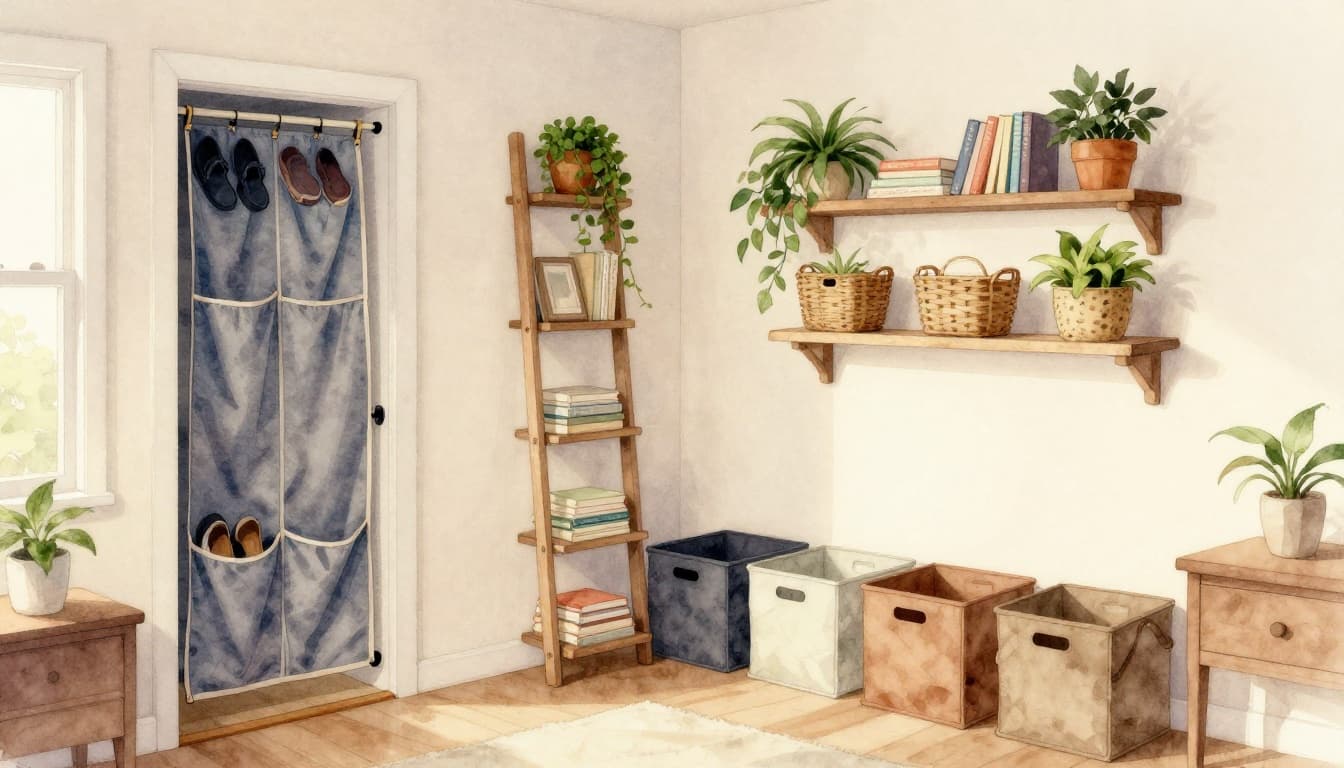
Tiny hacks can also help:
- Point shoes in alternating directions so pairs stay visible.
- Use a pool noodle inside purses or bags to keep their shape.
- Add a wall-mounted mail holder or coat rack with small baskets for keys.
Go Vertical to Free Up Your Floors
Start with the “where does clutter land” spots. In most homes, it’s floors, counters, and the backs of doors.
Try one option per area:
- Under-bed: slide bins for sheets, extra blankets, or off-season shoes.
- Over-door: store shoe pairs by door height, plus small cleaning tools.
- Corner shelving: use a corner unit for books, baskets, or board games.
- Wall ladders: mount a simple ladder shelf for items you use often.
Vertical storage is usually low-cost. Many setups use basic tools, or no tools at all (like adhesive hooks). Plus, you get faster “reset” moments because floors look clear.
In your next tidy day, notice what you keep stepping over. That’s a clue for where to install storage.
Bins, Baskets, and Sneaky Furniture Hides
Bins and baskets are small-space organizers’ best friends. They also reduce decision fatigue. When items have a container, they return to that container.
You can keep it simple with store-brand clear bins or matching baskets. Then group by purpose, not by brand. For example:
- “Kitchen tools”
- “Bathroom backups”
- “Workout gear”
- “Kids school stuff” (if applicable)
Labels can help, but only if you actually look at them. If contents are easy to see, skip labels and move faster.
Also, use furniture that hides items:
- Storage ottomans for blankets or remote controls.
- Coffee tables with drawers for games and chargers.
- Benches with lift tops for entryway clutter.
If you like planning before you buy, consider using a closet-planning app such as GetWardrobe. It helps you map out where things go, without you stacking extra items on the bed first.
Room-Specific Hacks That Fit Your Daily Life
Small spaces need organization that matches real routines. If storage is too hard to access, it won’t get used.
Pick one daily pain point per room. Then fix the most common “drop spot” first. That’s where clutter forms fastest.
For practical room ideas, Good Housekeeping has clear guidance for smaller kitchens and layouts, which often apply to other tight spaces too.
Kitchen Drawer Magic and Grouping Wins
Kitchen clutter usually shows up in two places: counters and drawers. If you fix one drawer, everything feels better.
Here’s a quick step-by-step you can do in about 20 to 30 minutes:
- Empty one drawer onto the counter.
- Sort into groups (utensils, measuring tools, serving bits).
- Use dividers or small bins for each group.
- Remove duplicates you never use (yes, that includes extra gadgets).
- Wipe the drawer and place items back in the order you grab them.
Ask yourself a simple question: “Do I reach for this weekly?” If not, it moves out or stays in a less convenient spot.
Also, keep frequently used items in the front or easiest section. If you store everything “equally,” you’ll still dig.
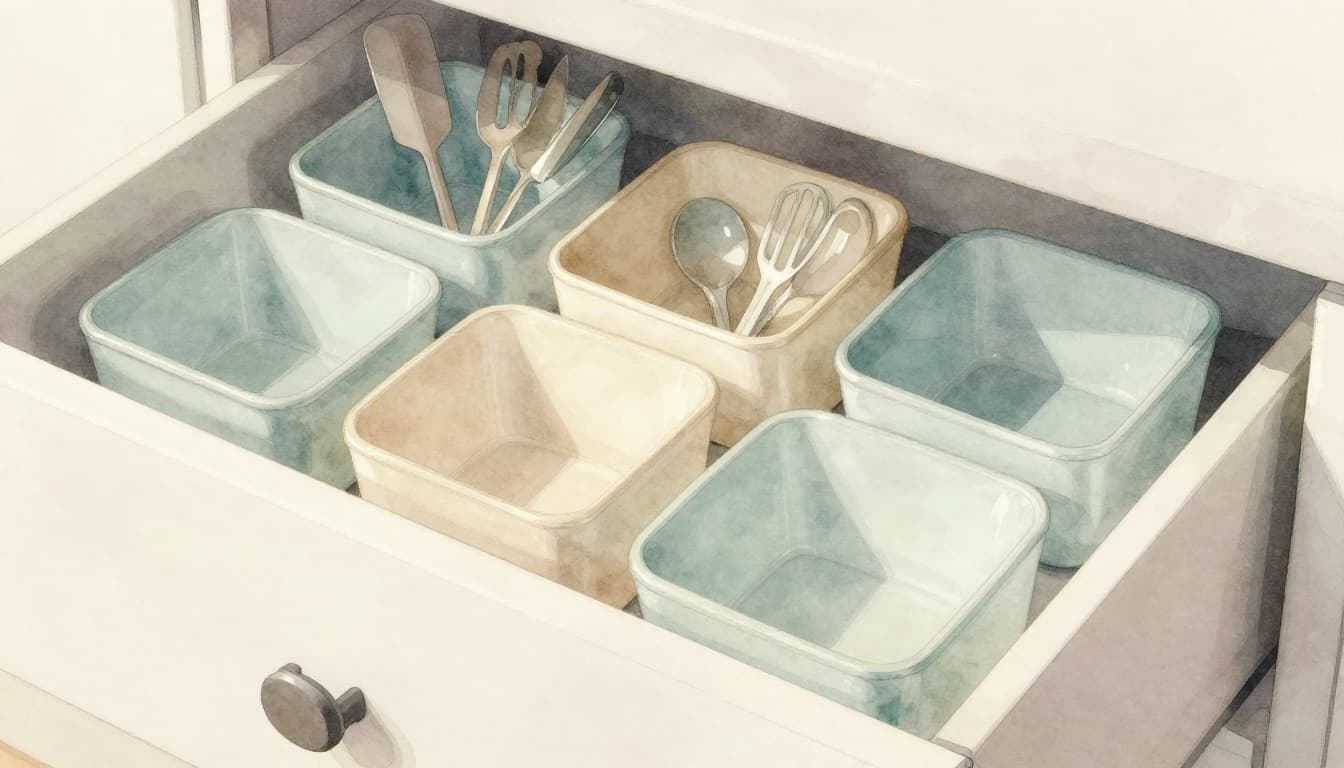
If you want more small-space kitchen ideas, see small kitchen storage organization tips.
Bedroom and Bathroom Bins for Peaceful Mornings
The bedroom is where clutter quietly builds. You notice it when you hunt for clothes or can’t find chargers.
Start with under-bed bins. Store items you use seasonally, like extra bedding or bags. Then add a storage bench at the foot of the bed for blankets and throws.
In the closet, reduce hanger chaos. Velvet hangers help clothes look neat, and they make the closet feel “done” faster.
For the bathroom, separate items into daily and occasional use:
- Daily bins: toothbrushes, face wash, hair ties, daily skincare.
- Occasional bins: backups, travel sizes, and new products you haven’t opened yet.
If you toss everything into one “misc” basket, the morning rush comes back.
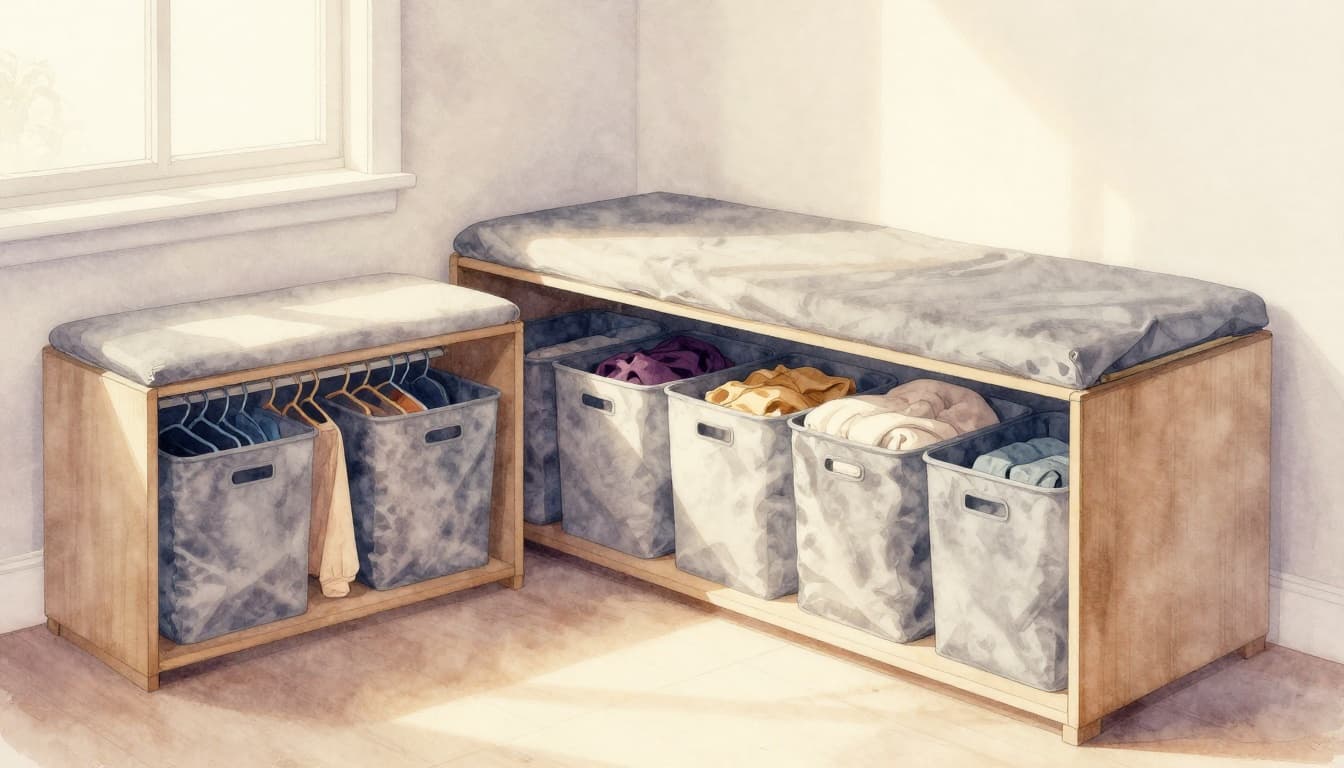
The goal isn’t a perfect room. It’s a morning routine that feels calmer.
Living Room and Entryway Spots That Wow
In the living room, storage often hides in plain sight. A storage ottoman or coffee table can hold throws, board games, and charging cables. Just keep one lid closed at a time. If everything is open, it still looks messy.
For the entryway, aim for “drop and done.” A bench with a tray, a small rattan box, or a basket for keys and wallets prevents the daily clutter spill.
Try these easy setup rules:
- Put a catch-all near the door.
- Keep one small bin for outgoing items (mail, returns, and recycling).
- Store shoes by type, not by “whatever fits.”
When the entryway behaves, the rest of the home feels easier.
Daily Habits That Keep Chaos Away Long-Term
Organization fails for one reason: we rely on motivation. Habits win because they run without willpower.
Make three small moves part of your routine:
- Do a daily 5 to 10 minute reset. Put things back, empty the basket, then stop.
- Keep one donation spot. A bag in your closet makes “remove” feel instant.
- Do a weekly scan. Check if items actually helped you this week.
Flexibility matters. If your system stops working, adjust it. Don’t punish yourself for needing change.
Decluttering can also create stress, especially in small homes. If you want psychology tips that make it easier to let go, check psychology tips to declutter without stress. You’ll get ideas for keeping your brain calm while you sort.
The best long-term result is simple: your stuff starts matching your life. Then organization becomes less about cleaning, and more about comfort.
Conclusion
If your small space feels overwhelming, start with easy wins. Focus on one zone, use a basket to catch clutter fast, and decide what stays with a quick shakedown.
Next, make your walls work harder with vertical storage and hidden containers. Then tune each room to your routine, especially drawers, bins, and entryway drop spots.
Finally, keep chaos away with tiny daily resets and one weekly check. That’s how easy ways to organize small spaces turn into a calmer home you can actually maintain.
Try one thing today, even if it’s only one drawer. Then share your win in the comments, so someone else feels ready to start.