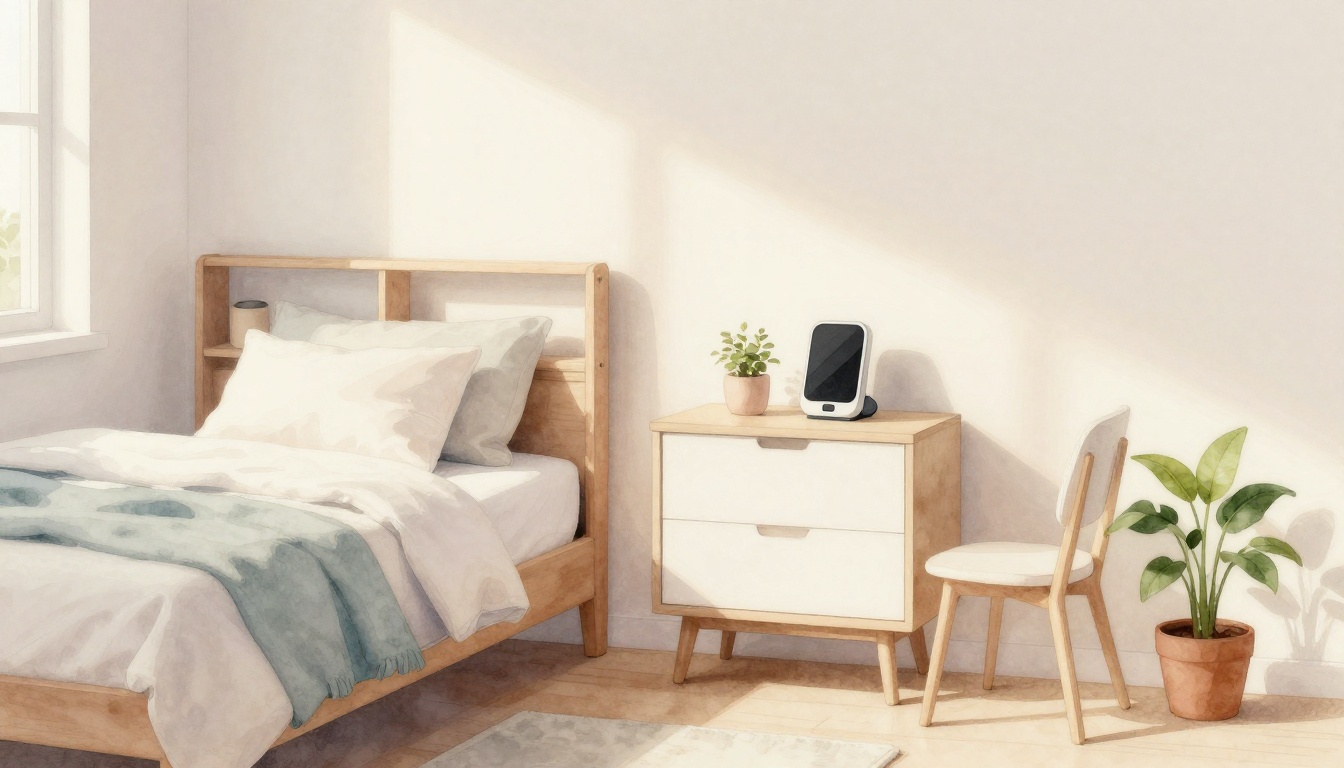
Coming home to a cluttered room after a long day can feel draining. You see piles on the floor, a chair covered in clothes, and laundry that seems to multiply overnight. That stress lingers, even when you’re trying to relax.
Now picture the opposite. Everything has a home, surfaces look calm, and your bed feels like a true reset button. When your room stays organized day after day, you tend to sleep better, focus faster, and feel lighter the moment you walk in.
The good news: keeping your room organized every day doesn’t take hours. It takes simple habits and smart setups that match how people live in 2026. Think multifunctional storage (so clutter disappears), natural materials (so your space feels warm), and quick routines that keep mess from piling up. You can even add small tech touches if they help you stay consistent.
This guide walks you through three practical parts: smart storage that hides clutter, a 10-minute daily routine, and easy hacks (plus a few tech ideas) that make the system stick. Ready to make your room a peaceful spot every day?
Set Up Storage Solutions That Hide Clutter and Save Space
If clutter is always “almost under control,” your storage probably isn’t set up for your real routine. In many homes, the problem isn’t that you own too much. It’s that the wrong items land in the wrong places.
Start with storage that does two things: creates clear landing spots and disappears visually. In 2026, many people lean toward multifunctional furniture, natural materials, and vertical systems because they save floor space and reduce decision fatigue.
A simple place to begin is with one piece that solves a daily mess. For example, a storage bench at the end of your bed can handle blankets, shoes, or bags.
Here are setup ideas that make daily organization feel effortless:
- Choose hidden storage for high-traffic items, like extra bedding, chargers, or spare towels.
- Use bins and baskets that match your zones, so items go back fast.
- Pick vertical storage to keep surfaces clear, especially in small rooms.
- Create one daily skincare tray or “use-now” basket, so the same items don’t wander.
If you want more ideas for space-saving pieces, see multifunctional storage furniture ideas for 2026.
Pick Multifunctional Furniture for Double Duty
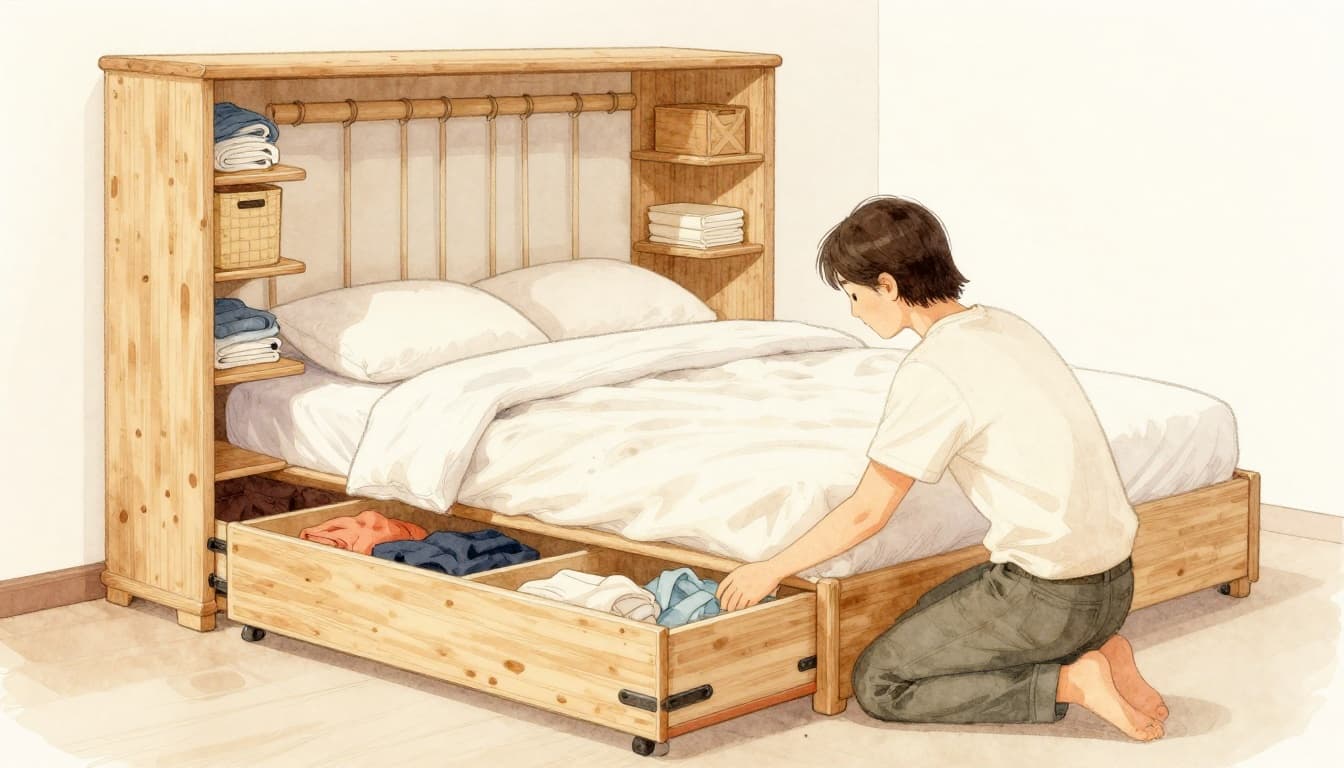
Multifunctional furniture works because it turns dead space into storage. It also cuts the number of places you need to check during cleanup.
Good options to look for include:
- Beds with drawers for clothes, linens, or seasonal items.
- Storage ottomans for blankets, games, or extra throws.
- Benches that hide clutter in the entryway or near the bed.
- Adjustable shelving so you can re-size your setup as your needs change (systems like freedomRail EDGE can help with this).
When you pick pieces, measure first. Don’t guess the width of a walkway. Instead, measure the space you want to keep open, then choose furniture that fits that flow.
Also, prioritize high-use items. If you touch it every day, it should stay within easy reach. If you only use it a few times a year, store it lower-need spaces or in hidden bins.
Natural materials like bamboo, rattan, or wood add warmth too. They don’t just look better. They can make “tidy” feel less sterile and more inviting.
Maximize Vertical and Hidden Spots
Floor space is precious. So instead of adding more clutter-friendly bins, go up and behind.
Vertical and hidden tools that work well in real homes include:
- Wall shelves with closed bins (great for bathrooms and bedrooms).
- Behind-door racks for hair tools, cleaning supplies, or small accessories.
- Over-door hooks for bags, robes, and light items.
- Magnetic strips for jewelry, small metal tools, or hair clips.
- Lighting that makes finding things easier, like motion-activated closet lights.
Here’s a simple install tip: test the height before you mount anything. Hold a rack or hook where it feels comfortable, then measure from the floor. That one step prevents the “too low” or “too high” regret.
When items live higher up or out of sight, your room looks organized even before you “tidy.” That’s the real trick.
Build a 10-Minute Daily Routine That Keeps Mess at Bay
Storage helps. But daily routines make it last.
In many homes, clutter grows because there’s no short reset. So you end up cleaning only when you’re overwhelmed. A 10-minute routine flips that. You clean before mess gets momentum.
Keep it brain-friendly. Pick one timer. Choose one or two zones. Then finish the same way each day.
Try this simple routine (end of day works best for most people):
- Reset surfaces (1 to 2 minutes)
Clear the obvious items from your bed, desk, or dresser. Put them into the right nearby bin. - Do a 10-minute tidy in one zone (6 to 7 minutes)
Focus on just one area. For example, your desk drawer or your dresser top. Use a timer so it stays doable. - Start a “night stack” for clothes and paper (1 to 2 minutes)
Clothes go to hamper or hang-up. Papers go into one basket for later. - Deal with “parking spots” (30 seconds to 1 minute)
Those piles by the door, chair, or nightstand? Put them away now or into a single “deal later” bin. - Do a morning scan (30 seconds)
Make the bed, smooth pillows, and check for cords on the floor.
If you want a similar time-based approach, this 20-minute organizing method explains how a short window can change your mindset about chores.
Master the Nighttime Reset for a Fresh Start
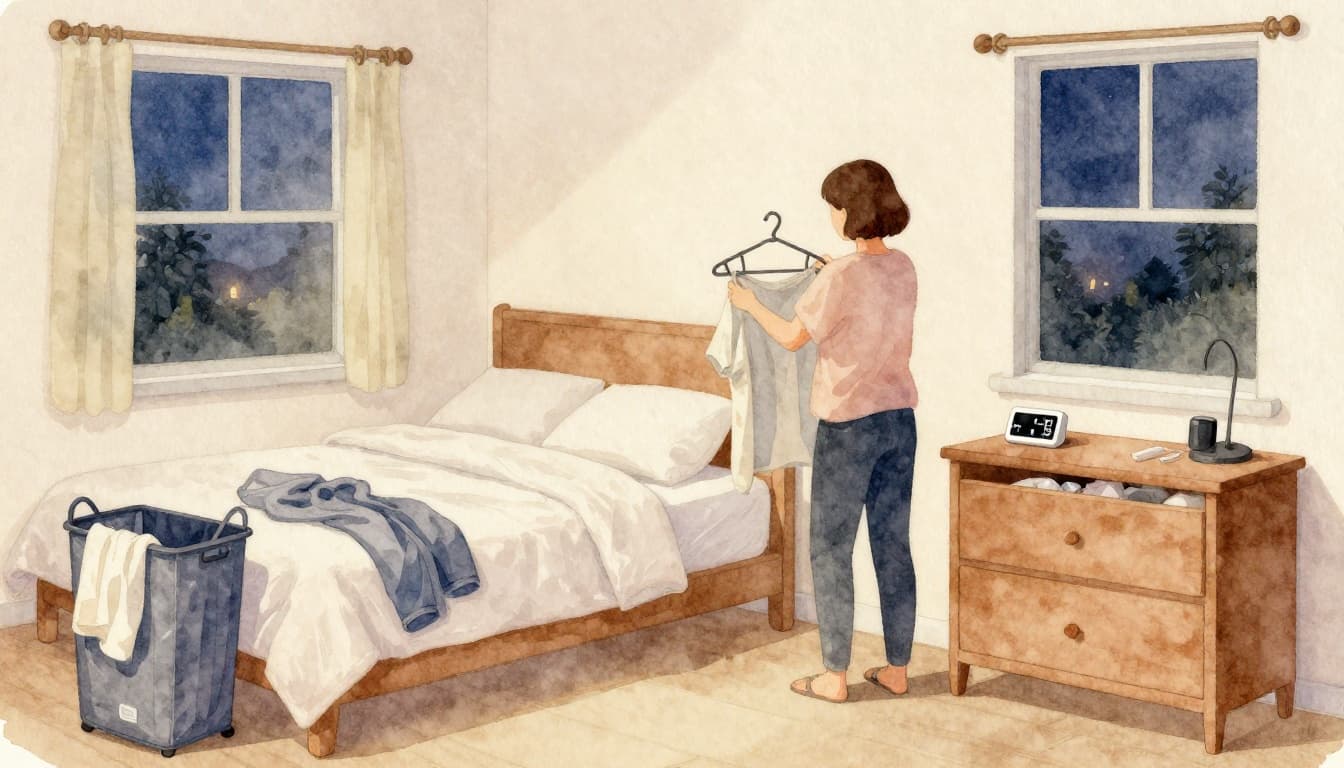
Night is the easiest time to stop clutter. You’re already slowing down, and your room is ready to become calm.
Your goal isn’t perfection. Your goal is preventing pile-up.
Start with surfaces. Clear the top of your dresser. Empty the nightstand into its home. Next, handle clothes in two moves: hamper or hang. That’s it.
If you spot items that don’t belong there, use a “deal later” basket. Put the items in one place. Then make sure you empty that basket during your next routine.
Here’s the big reason this works: you don’t have to remember what to do. The basket handles the “thinking.” Then the next day feels easier.
A short reset doesn’t just clean your room. It trains your brain to expect calm.
Kick Off Mornings with a Quick Scan
Mornings don’t need a full cleanup. They need a quick win.
Make the bed. Align pillows. Then do a fast floor check. Cords, socks, and bags usually show up there first.
If you drink coffee, pair the scan with that moment. For example, after your first sip, do the 30-second check. Habits stick when you attach them to something you already do.
Also, keep one rule: your morning scan always returns items to their nearest home. That keeps your routine smooth, even on busy days.
Finally, if you have a family, set the standard together. One person can reset one zone. Another person handles the next. You all win, and nobody gets stuck with the whole room.
Use These Smart Hacks and Tech for Lasting Results
Once your routine works, add a few smart helpers. Hacks should reduce friction, not add more rules.
In 2026, home organization tends to mix wellness-friendly systems with practical tech. People use simple tracking, eye-level sorting, and clear “homes” for daily items. The goal is the same: keep the room easy to return to.
Here are a few popular, low-stress strategies:
- Use-by-time sorting for daily items at eye level.
- One-in-one-out so clutter doesn’t grow unnoticed.
- Stylish bins so storage looks good, not sad.
- Phone photo inventories to avoid duplicates.
- Smart lighting like motion lights in closets (so finding items is faster).
One warning, though: don’t buy a bunch of gear at once. Start with what you already have. Then buy only what your system proves you need.
Track Your Stuff with Simple Digital Tools
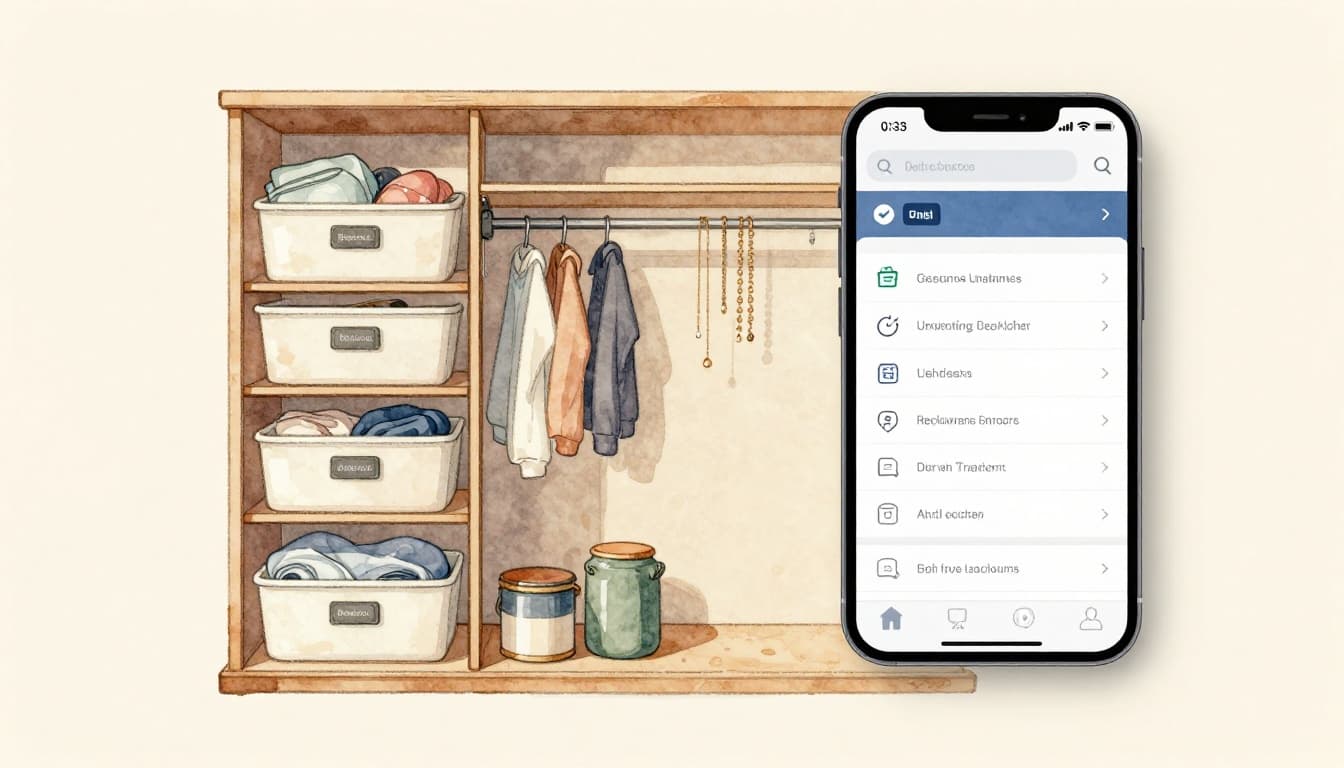
Digital tools can help when you forget what you own. They also help when you shop for backups.
A simple option is to create a home inventory using your phone. Take photos of closets and shelves, then add a quick note like “winter socks” or “extra bedding.” When you rotate seasonal items, update the list.
For a good starting point, check home inventory apps and templates. Even if you don’t use an app, the idea still works.
Set a simple schedule. Once a week, spend 10 minutes reviewing what’s in rotation. Move anything out of season into a hidden bin. Then keep daily items in front.
This approach helps small spaces too. When you can see what’s stored, you stop opening three drawers to search. Less searching means less clutter.
Apply the One-In-One-Out Rule Daily
If you want your room to stay organized, you need a boundary. One-in-one-out gives you that boundary.
Here’s how it works: when you bring in a new item, remove an old one right away. Don’t wait for a weekend purge. Do it during your routine.
Clothes are the easiest place to start. If you buy a new shirt, donate one shirt from the pile you haven’t worn. Books work the same way. A new book earns a spot only after an old one leaves.
This rule protects your space from slow growth. It also helps you notice what you truly use.
If you want a simple way to make it feel fair, pick one container for “items leaving the room.” When it’s time, you swap, then clear.
The best organizing system doesn’t ask you to be perfect. It keeps clutter from getting a foothold.
Conclusion
Keeping your room organized every day comes down to two things: smart storage and a short routine you’ll actually do. Multifunctional and hidden storage reduces visual clutter, and quick resets stop mess from building up.
Pick one change to start, like a 10-minute nightly tidy or a “deal later” basket. Then let the system carry you, even on busy days.
What’s the one small adjustment you’ll try this week to make your room calmer, starting tonight?