You spend hours cleaning, then dust and smudges are back by the weekend. That’s what makes the phrase home get dirty quickly feel so frustrating. In 2026, many homeowners deal with worse outdoor air from urban pollution, and those tiny particles can slip inside and settle on floors and furniture.
At the same time, it’s not just “mess.” Everyday habits and hidden home factors speed up buildup. If you cook without strong exhaust, use sprays and cleaners in every room, or skip filter changes, dust sticks to surfaces instead of getting cleared out. In many homes, tighter windows and doors also trap indoor pollutants, so dirt has more chances to settle and grow.
Meanwhile, HVAC systems can spread what they pull in, especially when filters are clogged or airflow is weak. That also means allergens and irritants can keep coming back, even when you wipe often.
Next, let’s break down the most common causes, grouped by environment, lifestyle, and home features, then cover simple prevention steps you can start right away.
Sneaky Reasons Dirt Keeps Piling Up in Your Home
You clean, you wipe, you vacuum. Then dust shows up again like it pays rent. Usually, it’s not that you missed something. It’s that invisible dirt keeps entering and getting protected in the places you don’t look.
Outdoor Dust and Air Sneaking Through Cracks
Even when you close the windows, your home is not sealed. Outdoor dust and fine particles can slip in through small gaps around doors, window frames, vents, and even plumbing penetrations. On top of that, windy days stir up pollen and dirt outside, so there’s more “stuff” to come indoors.
Here’s the sneaky part: indoor air can feel either too dry or too humid. When the air is dry, dust turns lighter and easier to spread. When it’s humid, dust can clump and stick to surfaces, and it can also feed mildew in damp corners.
Meanwhile, your HVAC can act like a conveyor belt. If filters are dirty or air is forced through unfiltered paths, particles don’t just settle. They circulate, then land on floors, curtains, and vents again.
So yes, it can feel like invisible invaders. And when air quality is bad, the attack gets worse. The EPA notes that smoke and other indoor air quality problems can worsen when outside air contaminants move indoors. If you want a solid baseline for how smoke affects homes, see Wildfires and Indoor Air Quality (IAQ) from the US EPA.
Quick checks that take minutes:
- Peek at your HVAC filter (and check the “replace by” date).
- Look for dusty paths at door bottoms and around window edges.
- If you notice dust bursts after you run fans or heat, your ductwork and returns may be part of the story.

Busy Family Life Bringing in Extra Grime
Life brings dirt in on purpose, even when you don’t mean to. Foot traffic is the biggest culprit in busy homes, especially when shoes stay on. Dirt on soles also carries outdoor grit and pollutants, then drops it onto tile, rugs, and hallways. In many households, switching to a no-shoes rule can cut tracked dirt by about half, because you stop the main “delivery system” at the door.
Then come the common daily scenes:
- School drop-offs and sports bags emptied by the door
- Snack time in the living room (crumbs land, crumbs spread)
- Pets hopping from couch to floor during “pet zoomies”
- Clutter piles that trap dust, then stir it up when you move things
Kids and pets add another layer. Hair, dander, and tiny skin flakes act like built-in dust fuel. Also, if you clean only the “visible” areas, dust spreads while you dust-swipe the wrong direction.
Try a quick reset this week:
- Take shoes off (or keep a strict shoe zone by the entry).
- Tidy clutter hotspots for 10 minutes before you vacuum.
- Wash pet bedding on a regular schedule, not “when it looks bad.”
Hidden Spots in Your House Trapping Mess
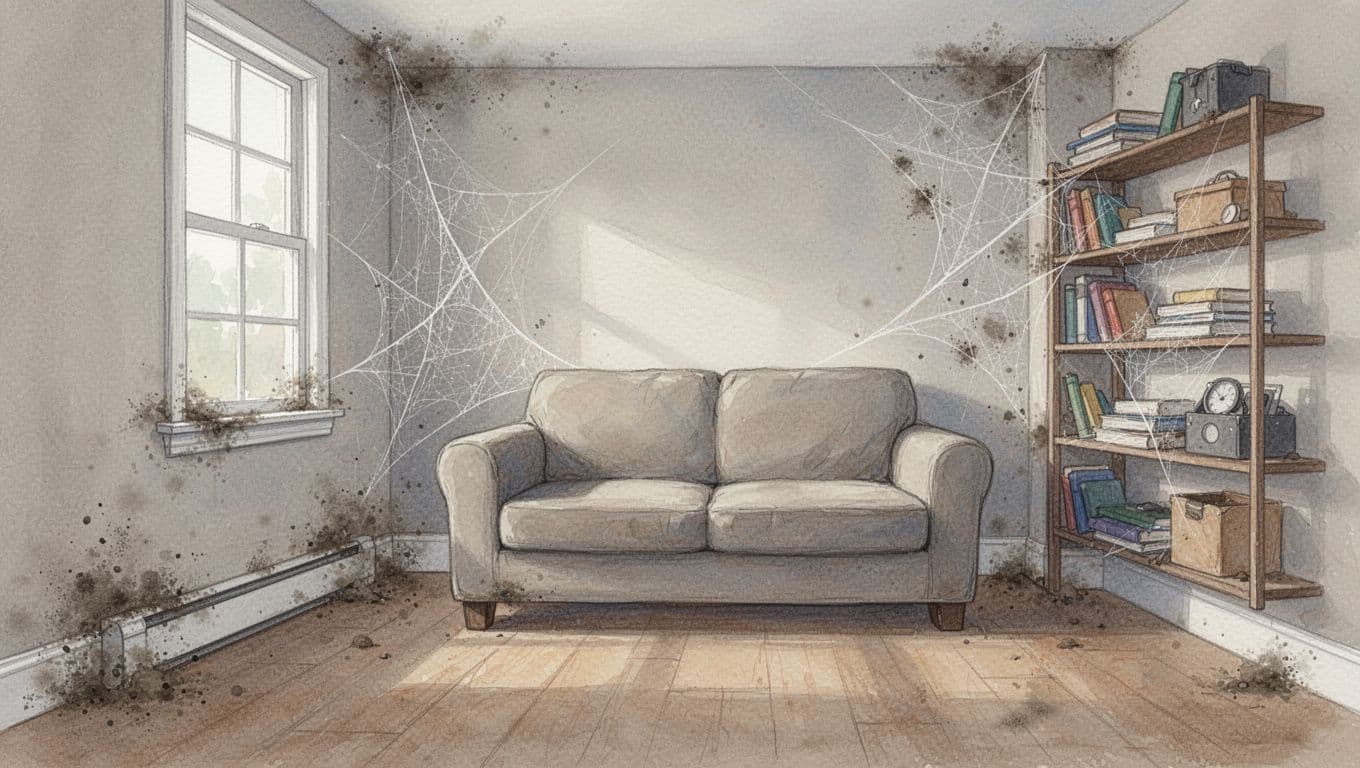
Dust loves surfaces that collect it, especially if you clean around them. Rugs, especially thick ones, can hold grime deep in the fibers. Upholstery does the same, and it often releases particles back into the air when you sit, stand, or move the cushions.
Clutter also works like a dust trap. When items sit close together, air flow slows down. Dust settles, then stays. That’s why countertops can look “okay,” but still feel dusty. Under or behind things, it quietly builds.
Even worse, some spots get missed because they don’t scream for attention:
- Fans (top blades and motor housing)
- Baseboards and corners
- Behind furniture (where your vacuum rarely fits)
- Caulk lines around sinks and windows (tiny gaps become dust highways)
- Scuff-prone walls (dust and residue cling to marks)
If your home’s been dusty no matter what you do, check HVAC supply vents and return grills too. Dirty systems can spread and recirculate particles, even when you think you’re keeping up. For a straightforward explanation of how dusty filters and airflow affect indoor air, read Why Dusty HVAC Filters Hurt Your Air.
For a quick list of commonly missed places, browse 15 Hidden Spots You’re Forgetting To Clean In Your Home.
Proven Ways to Stop Dirt Before It Settles
If dirt keeps coming back fast, don’t just fight what you see. Stop the flow that brings it in, and reduce what stays airborne. Think of it like putting up a fence before weeds spread, not pulling weeds after they flower.
Over the next few sub-sections, focus on simple, low-cost wins you can start this week. Start small, because small habits compound fast.
Block Invaders with Smart Home Seals and Air Fixes
Outdoor dust acts like a delivery truck. It slips in through tiny gaps, then lands where air slows down. Windows and door frames, baseboards, and even gaps around plumbing lines can pull in the grime you vacuum later.
Start with air sealing where it matters most:
- Run a quick “daylight check” around doors and window trim.
- Add weatherstripping or replace worn seals on doors.
- Use caulk for small gaps in trim, around frames, and other cracks.
- If you want step-by-step guidance, follow the basics in sealing cracks around doors and windows.
Next, tighten the air loop inside. Your HVAC moves air through the same system, day after day. When the filter underperforms, dust gets a second chance to spread.
A simple rule helps: change HVAC filters every 1 to 3 months. Choose higher-quality options that filter smaller particles. Many homeowners start with a better MERV-rated pleated filter and see less visible dust build-up after a couple cycles. For dust control ideas, see best HVAC and furnace filter for dust.
Then add one more piece: HEPA air purification. A portable HEPA purifier in your main living area or bedroom can pull out fine dust that lingers after daily activity.
Finally, control humidity. Aim for 40 to 50%. When humidity swings too high, dust can clump and settle faster. When it stays too low, dry air kicks up more particulates. Use a dehumidifier in humid months, and a humidifier when winters turn dry. A basic hygrometer helps you stay in range.
When you seal gaps, the dust pipeline shrinks. When you filter and purify, the dust that does enter stays less airborne for longer. In the long run, that means fewer “dust days” and less irritation for people with allergies.

Build Easy Habits That Slash Daily Mess
Habits beat “big cleaning days.” The reason is simple: dirt follows routines. Foot traffic brings grit. Surfaces collect it. Then you wipe it into the air because you dust dry or clean only what shows.
Start with a no-shoes rule. It sounds small, but it cuts tracked dirt at the source. Leave a pair of slippers by the door, or set a shoe rack just inside. If you want science-backed support, see leave your shoes at the door.
Now build a quick daily loop for high-touch zones. You do not need to clean the whole house every day. Instead, spend 10 to 15 minutes where dirt starts its climb:
- Wipe doorknobs, light switches, and cabinet pulls.
- Clear kitchen counters of crumbs and sticky residue.
- Tidy entryway surfaces where keys and bags land.
- Take one small bin pass through the main rooms to reset clutter.
Clutter is a dust pillow. When items stack up, air flow slows down, and dust settles in place. So, declutter with small reps: one bin emptied each day beats one huge cleanup on Saturday.
Pets add their own timeline. Groom your pet weekly, and vacuum pet areas more often. Wash pet bedding hot on a schedule you can keep. If you wait for “when it gets bad,” you give allergens extra time to build.
For the floor, vacuum matters most where people walk. Vacuum on a steady rhythm:
- Vacuum weekly for most households.
- Vacuum twice a week in high-traffic areas.
- Add monthly attention to a pet-friendly corner, plus the mattress area.
One habit to anchor everything: focus on consistency over perfection. Think “steady drip” instead of “big flood.” The dirt won’t get as many chances to settle.
Upgrade Fixtures and Routines for Lasting Clean
Prevention works best when your cleaning tools and materials support it. Some fabrics hold dust. Some routines stir it back up. Fixing those two things can make the whole house stay cleaner.
Start with fabrics. If you’re buying new items or swapping seasonal throws, choose low-shed options like cotton blends. Heavy, high-nap textures trap more particles. You can still use soft furniture, but plan to clean it the right way.
Next, change how you dust. Dry dusting spreads fine grit like flour in the air. Instead, use a damp microfiber cloth and work top to bottom:
- Weekly: wipe fans, shelves, and visible baseboards.
- Weekly: damp-dust window sills and ledges.
- Monthly: check blinds and wipe each slat lightly.
Walls also collect dust and residue. Plan seasonal spot-cleaning with a gentle cleaner made for painted surfaces. It prevents grime from building into stubborn streaks.
Beds need extra help because dust mites live in bedding. Use dust-mite covers on pillows and mattresses. Wash bedding hot weekly when possible, or at least follow a strict schedule your household can handle.
Also, clean the “hidden” spots that never look dirty until they suddenly do. Vacuum around:
- Under furniture edges.
- Couch seams and under cushions.
- Along baseboards and in corners.
- Entry rugs and the spots where shoes land.
Finally, treat cleaning tools like part of the job. After you use microfiber cloths, rinse them or wash them right away. Vacuum bags and filters also need care. When tools stay dirty, you move dirt instead of removing it.
Do one improvement this week, then the next. Your home gets dirty less often when your materials and habits work together, not when you fight alone.
Conclusion
Your home gets dirty fast because dirt keeps arriving (shoes, outdoor air), and because indoor air systems and habits move it around. The strongest fix is simple, stop the flow first, then clean less often and with less frustration.
Try picking 2 to 3 moves for this week. Start with a no-shoes rule at the entry, then check your HVAC filter date and swap on schedule. Add quick air sealing around door and window gaps, even small cracks matter, and you will likely notice less dust buildup in fewer days.
Once you reduce what gets in and what stays airborne, you prevent your home from getting dirty quickly. As a result, you save time, spend less effort on repeat cleaning, and support healthier breathing by cutting common dust and allergen triggers.
Share your top tip in the comments, then subscribe for more practical home hacks you can use right away.